A trigger warning applies to this article. It contains references to suicide and mental health crisis. If this is a difficult subject for you right now, please take care of yourself first. Support resources are listed at the end.
There is a moment Steve Phillip describes that is hard to forget. A man called Richard is called into an HR office, told he is being suspended over a historical complaint, handed a leaflet about the Employee Assistance Programme, and sent on his way into a dark, wet November evening. No one checked whether he understood the document in his hand. No one asked how he was. No one paused long enough to notice what was unfolding.
Richard did not make it home.
Steve shared that story with me on the Level Up Leadership Podcast, recorded in recognition of World Wellbeing Week. Steve is the founder of the Jordan Legacy CIC, a community interest company focused on practical, collaborative solutions to suicide prevention. He founded it following the death of his son Jordan to suicide in December 2019. He brought it to the conversation not as a tragic anecdote, but as a precise and uncomfortable illustration of what happens when organisations mistake compliance for care.
The Tick-Box Trap
Most organisations, if asked, will tell you they take mental health seriously. They have mental health first aiders. They have a wellbeing policy. Some even have a specific protocol for what happens if an employee dies by suicide. And yet, as Steve pointed out, very few have genuinely embedded wellbeing into the daily culture of how they operate.
The gap is not one of intention. It is one of execution. Writing a policy is a decision made in a meeting room. Culture is what happens in every corridor, every performance review, every difficult conversation a manager has on a Tuesday afternoon when they are tired and unsure and the person in front of them is clearly not alright.
Steve draws on a principle he calls the ‘do no harm’ approach, borrowing the spirit of the Hippocratic oath. The idea is that before any policy, procedure, or performance process is introduced, leaders should ask: how will this land? Is there any risk to the wellbeing of anyone involved? And if so, what mitigation exists? It is a deceptively simple filter, but most organisations have never applied it.
The Human Cost Has a Price Tag
One of the most striking points Steve made was about the economic case for getting this right. Suicide deaths are estimated to cost the UK economy around £10 billion per year. Deloitte has consistently reported that for every pound invested in workplace wellbeing, organisations see returns of around five pounds through reduced absenteeism, lower staff turnover, and improved productivity.
The moral imperative is obvious. But for those who need to make the business case to a board, the numbers are there. This is not a soft issue sitting on the edges of an HR agenda. It is a strategic one.
Yet Steve’s concern is that even where organisations are investing in training, they are not asking whether it is actually changing anything. Mental health first aid training is valuable. But if the line manager who completed that training still does not know how to sit with a colleague who is struggling, the training has not done its job.
A Framework Any Leader Can Use
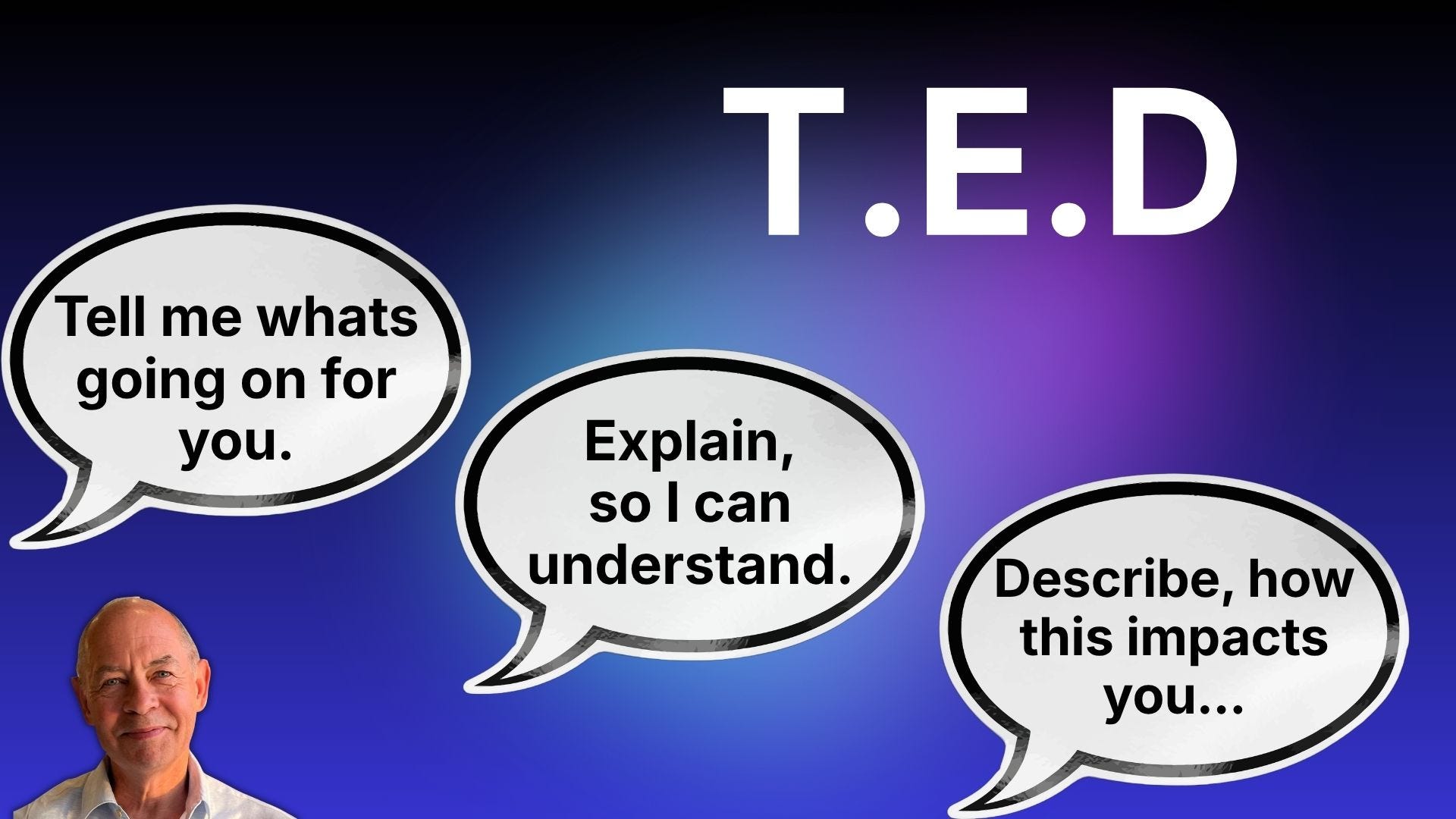
One of the most practical things Steve shared was a simple conversational framework known as TED: Tell, Explain, Describe. When a conversation takes a concerning direction, instead of reaching for a yes-or-no question or defaulting to the ever-deflectable ‘how are you?’, a leader can simply ask three open questions.
Tell me what is going on for you right now. Explain to me so I can better understand. Describe to me how this is impacting on you.
These questions do not require clinical expertise. They require presence, eye contact, open body language, and a genuine willingness to hear the answer. What they do is open a door. They give the person in front of you somewhere to go. And, as Steve notes, they are far less frightening to ask than they might seem at first. He encourages leaders to practise saying them out loud, alone if necessary, just to get familiar with the words.
That advice resonated with me. I watched a clip of Steve delivering this framework in a TEDx talk, and I found myself saying the words aloud in an empty room. It was uncomfortable. Which is precisely the point: if we find it uncomfortable in private, we need to build our familiarity before we find ourselves needing it in a real conversation with someone in crisis.
Men, Masculinity, and the Cost of Presenting Too Late
75% of all recorded suicide deaths in the UK are men. The reasons are complex, but one of the most significant is that men tend to present much later in a mental health crisis. Stigma, the pressure of masculine identity, and a reluctance to ask for help all contribute to a pattern where men reach out only when things have become acute.
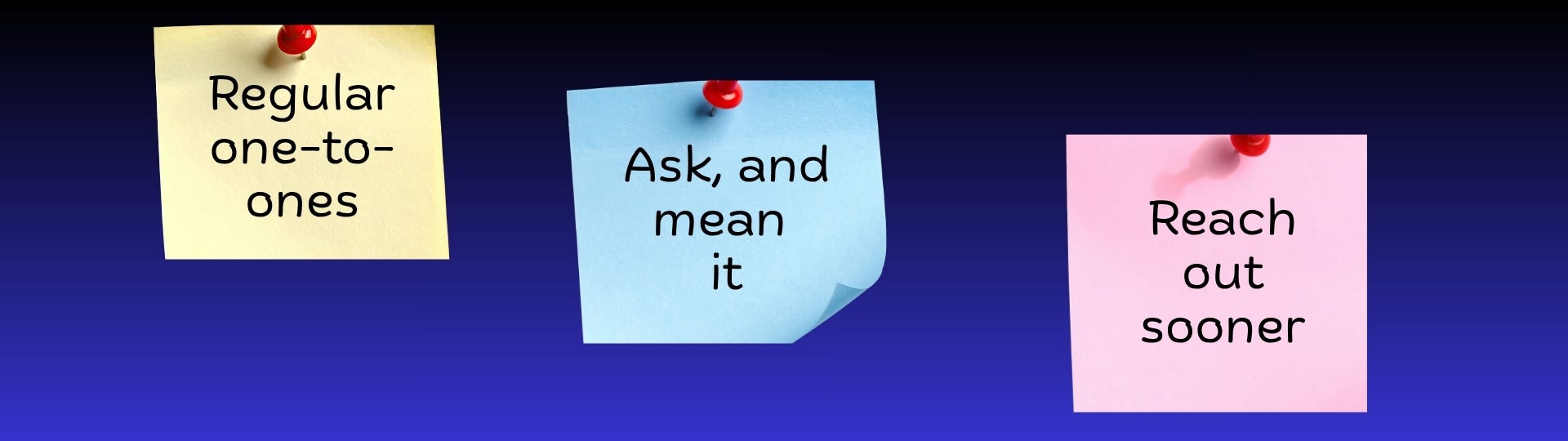
The implication for leaders is clear. If you are waiting for someone to come to you, you may be waiting too long. Regular, genuinely informal one-to-one conversations, not appraisals, not performance reviews, but human check-ins that include questions about capacity, about relationships within the team, about how someone is doing in the fullest sense, create the conditions where people can speak sooner. Monthly, even briefly, those conversations can shift the dynamic from reactive to preventive.
Culture is Not a Programme
This connects to a broader argument that runs through my own book, Enhanced Leadership, and through much of what Steve said. Psychological safety is not a document you file with HR. It is not a training course you complete once a year. It is the sum of small human interactions, daily decisions about how you speak to people, how you handle bad news, how you treat someone at their lowest point. In Enhanced Leadership, I describe this as the alignment between what you believe, what you say, and what you do. Steve would recognise that framing immediately.
The story of Richard is not a story about a bad organisation. It is a story about a process that was followed without the human layer that should accompany it. A five-minute conversation, asking whether Richard understood the EAP leaflet, asking whether there was anything immediately useful in it for him, acknowledging that this was difficult news, could have changed the outcome. It did not need to be lengthy. It needed to be human.
On Remote Working and Real Connection
I raised the question of remote and hybrid working with Steve, and his response was characteristically practical. His view is that mandating a return to the office is, at this point, largely a missed opportunity: the hybrid world is here and organisations need to adapt to it rather than resist it. The more useful question is what can be co-created with employees to help them feel genuinely connected. A buddy system, a standing wellbeing conversation, a culture where asking ‘how are you?’ means something. Steve’s suggestion is worth taking seriously: ask your people what would make them feel more connected, and listen to the answers.
For Coaches
If you work with leaders and managers, this episode surfaces a pattern worth exploring with clients. Many leaders have the right values but not yet the language or confidence to act on them when it matters most. They know they should check in. They know the culture should be different. But in the moment, uncertainty takes over.
Useful questions to bring into a session might include: when did you last have a genuinely informal one-to-one with each member of your team, one that was not performance-related? How would you respond if a team member disclosed that they were having thoughts of suicide? What does your organisation’s EAP actually offer, and could you explain it clearly to someone in distress?
The TED framework is also worth introducing directly to coaching clients. It is accessible, memorable, and practical. It gives leaders a starting point when they feel at a loss for words.
A Message Worth Keeping
Steve ended our conversation with something Desmond Tutu is remembered for: we need to stop pulling people out of the river and go upstream to find out why they are falling in. That principle, applied to business, means building the conditions where people do not reach crisis point before they feel able to speak.
Most suicides are preventable. That is not a platitude. It is a finding grounded in research and evidence. And early, honest, human conversation is one of the most powerful tools available. Any leader can offer that. It costs nothing except the willingness to show up as a human being first.
If you or someone you know needs support, please visit thejordanlegacy.com for a comprehensive resource library covering mental health and suicide. You can also contact the Samaritans, any time, on 116 123, or visit Mind at mind.org.uk.